
Track Spending Per Occasion to Understand Your Spending Habits
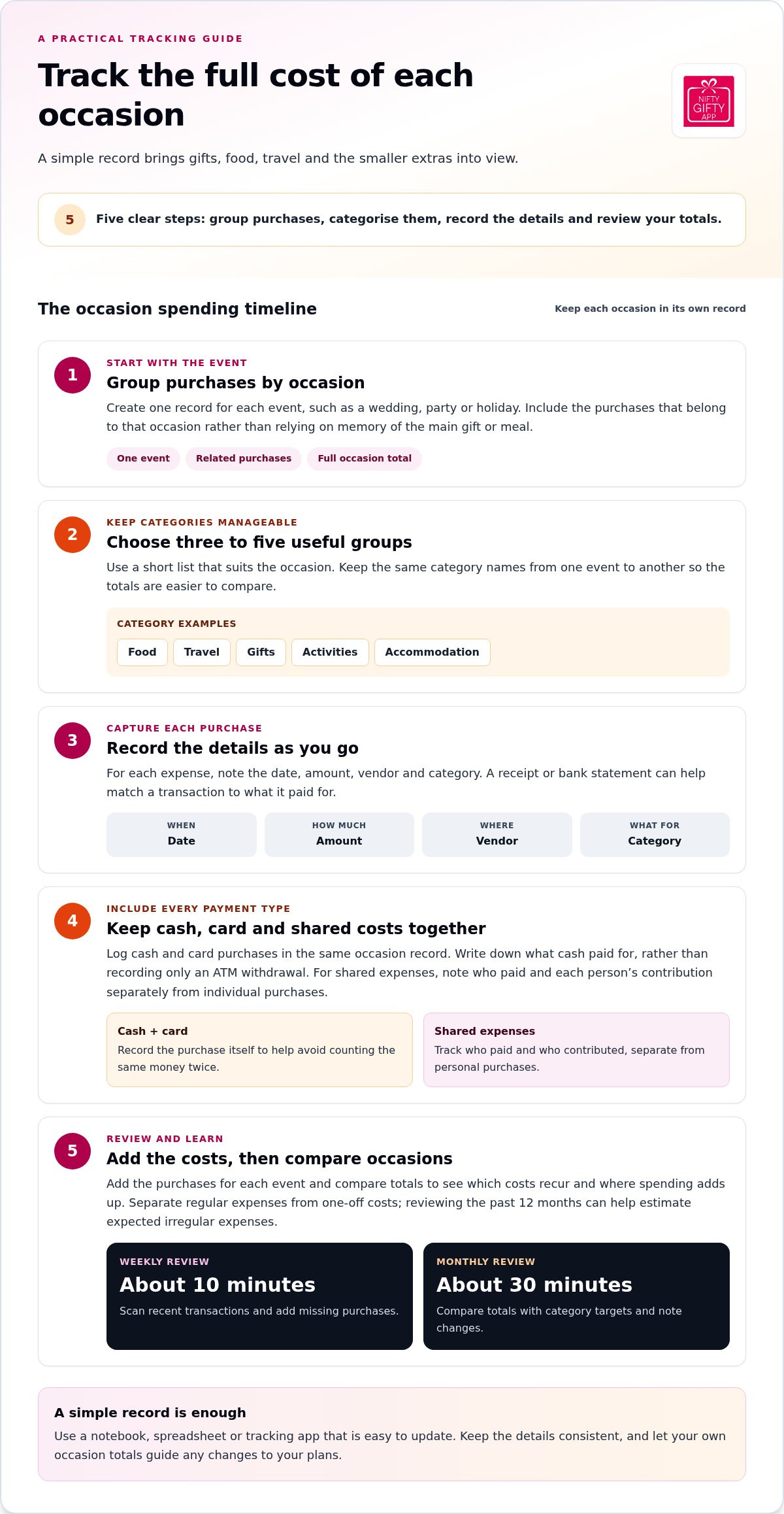
Occasion costs are easy to underestimate because they build up across separate purchases. To track spending per occasion, group each related purchase under the event, record its date, description and cost, then add the amounts. Repeat for each occasion and compare totals to see where your money goes.
It’s easy to remember the main gift or meal and overlook smaller extras. A simple record brings the full cost into view without turning every purchase into a budgeting project. Use a notebook, spreadsheet or tracking app, as long as it’s easy to update.
This guide explains how to categorise occasion expenses, choose a tracking method that suits you and spot spending patterns. Reviewing your totals can show which occasions cost more, which expenses recur and where you might want to make a change. Moneysmart says tracking spending can help people spot patterns, plan for bills and feel more in control of their money.
Table of Contents
Categorising expenses
Group purchases by occasion, then sort each event’s expenses into a few useful categories. Record enough detail to compare the total with your savings goal or spending limit.
Costs for weddings, parties, holidays and other occasions vary with guest numbers, location, travel, accommodation, food and activities. List the expenses that apply to your plans instead of relying on a typical total.
Choosing spending categories
Spending categories are simple groups that show what each purchase paid for. Start with three to five, such as food, travel, gifts, activities and accommodation, and adjust them to suit the occasion. Moneysmart recommends categories such as food, transport and health for tracking transactions. A short list makes comparisons easier; 47 categories can become difficult to maintain.
Categorising regular and irregular expenses
Regular expenses recur, while irregular expenses appear occasionally or at particular times of year. Separate recurring costs, such as a monthly subscription, from one-off purchases, such as a birthday venue or holiday activity. Moneysmart recommends highlighting bills that recur quarterly and yearly. To plan for expected irregular expenses, review the past 12 months and estimate each cost against your circumstances.
Checking purchase details
Record the purchase date, amount, vendor and category for each expense. These details help you catch a missed transaction and distinguish occasion costs from everyday spending. For example, note the date, venue, amount and “food” category for a dinner purchase. A bank statement can help match card transactions to receipts.
Use the same category names across occasions. If decorations are “event supplies” for one birthday and “gifts” for another, comparisons become harder. Check the date and vendor before categorising a purchase, especially when one receipt includes both party food and household groceries.
Tracking cash and card spending
For one occasion, log cash and card purchases in the same record, with the date, amount, vendor and category for each purchase. Add cash spending as it happens, using a note or spending diary, then compare card entries with your bank transactions. Record what the cash paid for, not just the ATM withdrawal, to avoid counting the same money twice.
To split occasion costs among friends or family, record who paid and which purchases were shared. Agree how to divide shared expenses, then note each person’s contribution separately from individual purchases. This gives the organiser a clear occasion total without mixing shared costs with personal spending.
Set a limit for each category and a savings goal for the occasion. A$50 a month for lunches is an example of a spending limit; an approximate A$200 grocery total can serve as an awareness target. Use those examples as prompts, not occasion budgets. Compare your own purchases with your goal, then adjust categories to help save money.
Why does tracking spending help?
Reviewing transactions turns a vague sense of spending into a clearer picture. Reviewing transactions can help clarify which costs recur, which are occasional and what an event involved.
Review statements across accounts
Start with statements and transaction histories from the past few months, checking each account or card used for household spending. Include direct debits, cash withdrawals and card purchases so an expense doesn’t disappear just because it came from another account. Moneysmart recommends highlighting quarterly and yearly bills during a review. These less frequent transactions can affect how realistic a monthly spending plan feels.
Match each transaction to its purpose. A supermarket shop might include both occasion food and weekly groceries, so use a receipt or note to separate the relevant amount. Check your bank account regularly for direct debits, including subscriptions that can blend into routine spending. Reviewing accounts together can also reveal duplicate services or costs you’d forgotten.
Make weekly and monthly reviews manageable
A weekly review can take about 10 minutes; a monthly review about 30 minutes. Use the shorter check to scan recent transactions and add missing purchases. During the monthly review, compare totals with your category targets and note changes in your habits. NAB research found that 50% of Australians don’t regularly sit down to look at their finances, so a regular appointment can help make the task part of the routine.
Keep the review focused. Look at your last five transactions, identify what each one was for and correct any unclear category. If a weekly check shows an occasion expense recorded as everyday spending, update it before the month ends. Regular checks can help you spot overspending while there’s still time to adjust other plans.
Check subscriptions and spending targets
Review subscriptions specifically, as their charges can recur without a fresh decision each time. If you haven’t used a premium music subscription for two months, consider whether it still belongs in your budget. The point isn’t to cancel every optional cost. Compare what you pay with what you use, then decide whether the expense still suits your circumstances.
Compare actual totals with a target, then investigate the difference rather than treating it as a failure. For example, spending A$230 on groceries against an approximate A$200 target is a prompt to review what happened. Check whether the difference came from occasion supplies, a price change or an extra shop. A realistic target reflects actual purchases and priorities.
Common tracking mistakes include missing cash purchases, forgetting another account and assigning a mixed-purpose receipt entirely to one category. Don’t draw conclusions from an incomplete period. Check transactions and subscriptions before changing a spending target.
Tracking can also show the difference between spending that feels worthwhile and spending that has slipped into habit. Occasional A$12 lunches, for example, added up to A$240 a month in one account. That total doesn’t decide what you should spend, but it gives you a concrete basis for choosing whether to keep the habit, adjust it or redirect some money towards savings.
Tracking spending with spreadsheets, notes and apps
A spreadsheet, paper diary or app can all help track occasion expenses. Choose a method you can update as purchases happen.
Choosing a tracking method
Your tracking method is where you record each purchase and the occasion it belongs to. Choose a format that makes regular updates easy.
A paper diary suits people who prefer writing things down, especially when they use cash. A spreadsheet lets you sort entries by occasion, category or date. An app can display spending history and category totals. Try one method for a fortnight, then notice whether recording purchases fits your routine and lifestyle.
Keep the layout consistent. In a spreadsheet, use columns for date, item, amount, category and occasion. In a notebook, use the same labels for every entry. If you use an app, add an occasion note where possible or keep a matching list separately. Any method becomes less useful if you stop updating it.
Keeping receipts and records
Saving receipts and matching them to your records helps explain an occasion total, particularly when you’ve used several shops or payment methods.
Set receipts aside as you go, then enter their details in your tracker during a weekly review. Note the vendor, purchase date, amount and occasion. Keep digital receipts together in a folder named for the event. Store paper receipts in an envelope with the same occasion label.
Record cash purchases manually in your diary or spreadsheet, since they may not appear in card transactions. For a mixed receipt, note which items were for the occasion and which were household purchases. Record refunds and returned items too, so the final total reflects what you actually spent. A clear record makes it easier to compare expected and actual expenses.
Tracking occasion spending with apps
Apps and spreadsheets can organise spending records, but the occasion label is what makes an event’s total visible. Check that your method keeps each occasion separate.
In Australia, Spending Tracker includes daily spending records, category reports and spending history. It also lets users choose weekly, monthly or yearly tracking periods. Use a consistent occasion label to distinguish a birthday from everyday purchases. Don’t assume a general category report groups transactions by event.
A personal spreadsheet can handle that detail manually. Add one row for each purchase and include an occasion column, then filter entries for a birthday, holiday or family celebration. Mia Sandgren’s spreadsheet includes expected annual expenses, and she updates it monthly to reflect on spending. A paper diary works too: the spending diary worksheet allows each purchase a joy rating out of 10. Pick the format that helps you track your spending without making each entry a chore.
Benefits of tracking spending
An occasion record shows where your money goes beyond the main purchase. Add travel, food, gifts and activities to the same total. This fuller picture helps you compare similar events and identify which choices made the biggest difference. A birthday dinner might seem affordable on its own, but transport and decorations can change the overall cost. The detail gives you something useful to review next time.
Moneysmart says tracking spending can help people spot patterns, manage debt, plan for bills, reach savings goals and feel more in control of their money. For occasion planning, use past records to make the next budget more realistic. If a family celebration involves recurring travel costs, record them with the other event expenses. Consider those costs when deciding how much to set aside, rather than treating each occasion as a surprise.
Tracking also makes room for spending that feels worthwhile. A record lets you weigh a meaningful expense against less satisfying purchases. Add a short note about what it covered, such as accommodation or a special activity. That context can help you decide what to repeat and what to change.
Small, repeated purchases can look different once they’re added together. A coffee habit can cost A$1,300 annually, an example of how a running total can inform a choice. Apply the same idea to occasion-related extras: note each purchase, then review the total for decorations, meals or entertainment. The aim isn’t to label every cost as good or bad. It’s to see the full amount and decide whether it matches your priorities.
A clear record can make group occasions easier to discuss. If several relatives contribute to a shared celebration, list the costs and who paid for each one. This gives everyone a clearer picture of the total and separates shared expenses from personal purchases. For a family gathering, a simple summary of venue, food and activities makes future planning more grounded in what actually happened.
Make the review useful enough to justify the effort. After an occasion, compare the planned amount with the actual total, then note one change for next time. You might keep the same venue but simplify the meal, or set aside travel savings earlier. A short review turns your record into useful information, rather than a list of figures that goes untouched.
Identifying spending patterns
Comparing occasions can reveal which costs recur and where your money goes. One event gives you a total; comparing records over a fortnight or longer can show which expenses keep appearing and which were unusual.
Compare actual occasion spending with your original budget and similar past events. Put the totals side by side, then compare matching categories, such as food with food or travel with travel. If a family birthday cost more than last year, check what changed before adjusting the next budget. A larger guest list or different venue may explain the difference.
Give comparisons enough time to show useful detail. A fortnight can reveal early patterns, while a month or two of tracking may offer more insight into spending habits. A single event may not represent your usual costs. Repeated occasions help distinguish one-off expenses from costs that regularly affect your plans.
Look for timing as well as totals. For example, withdrawing A$150 on Monday and finding none left by Wednesday shows how quickly cash can go. If this happens around event preparation, check the purchases made between those dates. The point isn’t to judge each expense; it’s to find the places where a clearer record could help you plan.
Check categories for small costs that build up. Spending A$200 on takeaway in a month is a prompt to review what happened, not a reason to assume the same pattern applies every month. Check how often the expense occurred, whether it related to an occasion and whether it matched your priorities. This keeps one unusual month from setting an unrealistic target.
Moneysmart says tracking spending can help people spot patterns and reach savings goals. Use that insight to connect recurring expenses with specific choices. If several occasions involve similar transport costs, include travel in future plans. If an activity cost more than expected, compare the cost with the enjoyment or value you noted afterwards.
Keep the review practical: compare the occasion total with your budget, check which categories changed, then write one adjustment for next time. “Set aside more for travel” is more useful than simply labelling an event expensive. After several occasions, review those notes and decide whether the adjustment suits your circumstances.
Patterns are clues, not instructions to cut every cost. A holiday expense may be a deliberate priority, while a recurring charge might no longer suit your plans. Use your records to decide what to repeat, change or include in your savings goals. Each review can then help you plan the next occasion.
Nifty Gifty App
Nifty Gifty App helps organisers manage gift lists when a birthday, holiday or family celebration brings people together. Use it to keep gift choices organised and see group contributions in a live running total. Contributors make payments separately; the app tracks contributions but doesn’t collect or process payments.
Organisers use the mobile app on iOS or Android. Guests can claim gifts through a secure link or QR code without downloading an app or creating an account. Claims update in real time, helping everyone see what’s already been claimed. Recipients receive gifts; they don’t claim them.
Nifty Gifty App is a useful next step when your occasion spending includes coordinating gifts with family or friends. Visit Nifty Gifty App to organise your next occasion.
Make your next occasion feel more intentional
Before planning your next occasion, decide what you want to make room for. It might be time with family, a shared meal or a thoughtful gift. Let that priority guide your choices as plans take shape. Keep a brief note of what you’d like to repeat, too. Your future self will have more than a vague memory to work from.
Deciding to track spending per occasion can help turn those priorities into a clearer plan. Use what you learn to shape the experience around what matters to you, rather than letting every small decision happen by default. You don’t need a perfect plan. Start with one occasion and one practical intention.
If coordinating gifts is part of your plans, Nifty Gifty App can help organise that part of the celebration. Explore Nifty Gifty App and make space for a more thoughtful next occasion. You can take the next step at your own pace, with a clearer sense of what you want the day to feel like.
Frequently Asked Questions
What does it mean to track spending per occasion?
To track spending per occasion, keep one record for costs connected to a single event, separate from everyday purchases. For a family birthday, note the venue booking and transport separately from weekly household spending. This shows the occasion’s overall cost and gives you a basis for comparing it with another event, such as a school celebration or holiday gathering.
What expenses should be included when tracking spending for an occasion?
Include costs directly tied to the occasion, even if they fall before or after the event itself. For a weekend celebration, that might mean accommodation booked earlier, a deposit, transport, food, decorations, activities and a later refund. If a purchase serves both the event and normal household use, record only the portion that belongs to the occasion. This keeps the total meaningful.
How can I set an occasion budget and track spending against it?
Set a total limit before committing to bookings, then divide it among the parts that matter most, such as venue, travel and food. Mark each amount as planned, committed or paid so you don’t mistake a deposit for the full cost. After each purchase, update the relevant amount and compare the remaining balance with upcoming expenses. If plans change, revise the allocation and note why.