
Plan a Christmas budget, choose flexible gifts and schedule shopping trips

What if Christmas shopping felt less like a string of urgent errands and more like a couple of well-planned outings? A stress-free Christmas shopping plan for 2026 can start with a clear budget, a flexible gift list and shopping dates booked in advance.
Starting in October or November gives you time to look for gifts and compare options before December gets busy. Then schedule two shopping dates over the next four weeks, so you can spread the task out instead of trying to fit everyone and everything into one trip.
It’s easy to focus on finding the right gift and leave the practical details until later. A spending limit, backup ideas and a plan for where to shop make decisions easier without taking the fun out of giving.
Here’s how to set your Christmas budget, stay open to different gift ideas, choose where to shop and plan shopping trips around real life.
Table of Contents
1. Setting a Christmas budget
Set one total for Christmas spending, then divide it among gifts, meals, decorations and travel. This gives each part of the holiday season a limit before festive offers and extra outings compete for your attention. Keep the total within what you can comfortably spend.
List each gift recipient and set a separate limit beside their name. Include family, friends, teachers and workmates, then add the limits together. If relatives suggest gifts, share your spending boundaries so their recommendations fit your plan. Keep a simple record of recipients, purchases and costs to see what’s covered and pause before an impulse buy.
Estimate first: Use catalogue prices to estimate each gift’s cost before shopping.
Track as you go: Record each purchase against the recipient’s limit, including small extras.
Pause before adding: Compare an unplanned item with the remaining gift budget before deciding.
Keep categories separate: Set distinct limits for gifts, food, decorations and other seasonal costs.
For a budget-friendly Christmas meal, plan the menu before buying ingredients. Agree on what each person will bring, such as a salad, dessert or side dish. Sharing the food and cooking costs also helps avoid buying ingredients for dishes already on the menu. Check your pantry before writing the shopping list.
To avoid Christmas shopping scams and counterfeit products in Australia, buy from a seller you can identify, read the product description carefully and check that the price and payment details make sense. Be wary of unexpected links and unusually low offers. If a listing seems suspicious, don’t enter your payment details.
Reduce packaging and waste by taking reusable bags, choosing gifts with less packaging and reusing gift bags or wrapping you already have. For Christmas meals, plan portions and coordinate dishes with guests so fewer ingredients go unused.
People in Australia who need financial guidance and support can contact The Salvation Army’s Moneycare on 1800 722 363.
2. When should you start prepping for Christmas?
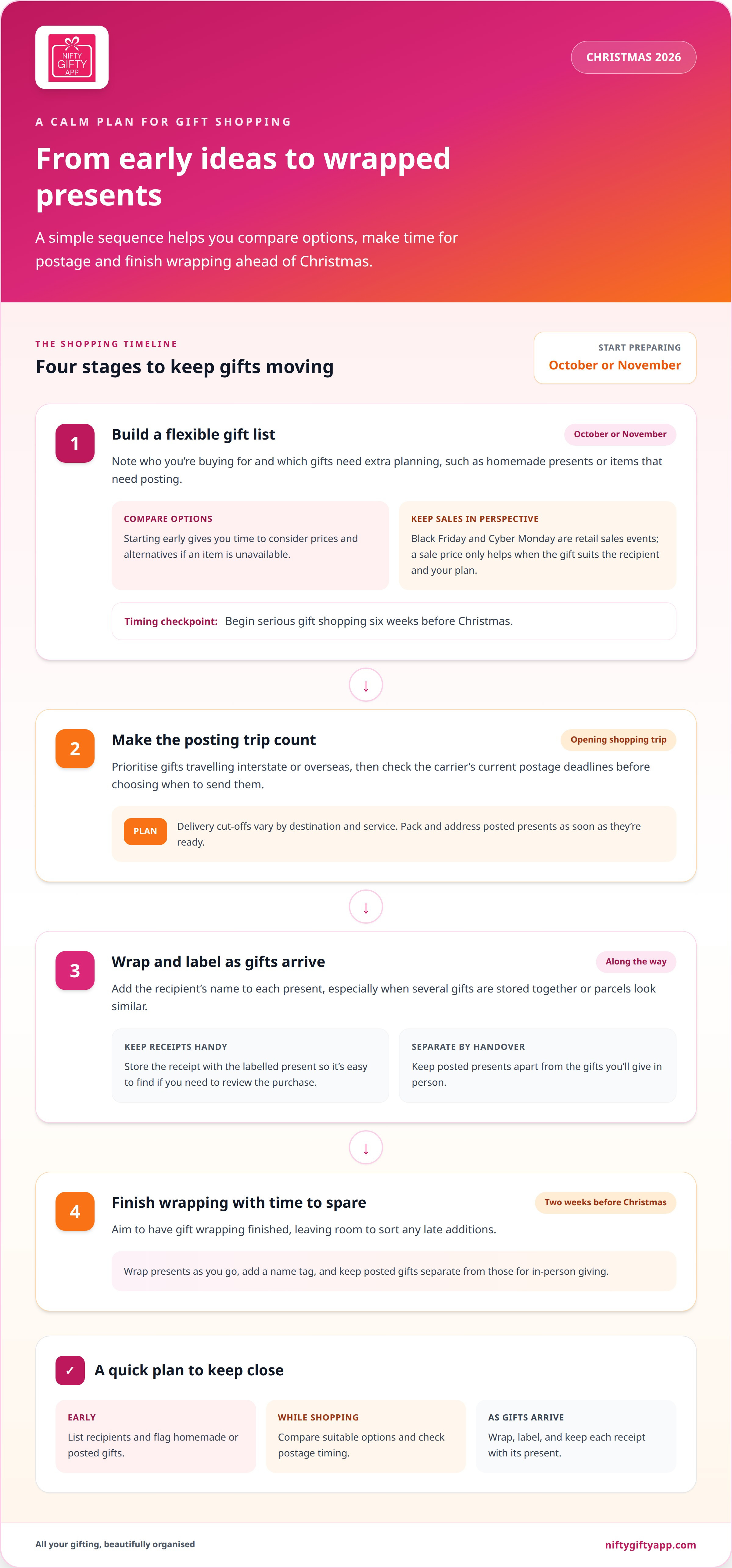
Start Christmas gift shopping in October or November if you want time to compare options and consider early sales. This gives you room to spread purchases across the holiday season instead of making every decision in December. For a simple checkpoint, begin serious gift shopping six weeks before Christmas and work through your list in stages.
Starting early doesn’t mean buying every Christmas gift at once. First, note who you’re buying for and which gifts need extra planning, such as a homemade present or an item that needs posting. Tackle those time-sensitive choices first. A present travelling to family interstate or overseas needs more lead time than one you’ll hand over in person.
Use a short schedule to turn early preparation into clear next steps:
October or November: Begin shopping, watch for early sales and note promising gift options.
First shopping trip: Purchase gifts that need to be posted, then check postage deadlines before choosing the sending date.
As gifts arrive: Wrap and label each one with the recipient’s name, especially if several presents are stored together.
Two weeks before Christmas: Aim to have gift wrapping finished, leaving time to sort any late additions.
Buying gifts early gives you more time to compare prices and consider alternatives if an item is unavailable. Black Friday and Cyber Monday are well-known retail sales events, but a sale price only helps if the gift suits the recipient and your plan. Keep the receipt with the labelled present so you can find it if you need to review the purchase.
Make posting presents an early task of its own. Choose gifts for relatives who live interstate or overseas during your first shopping trip, then pack and address them as soon as they’re ready. Delivery cut-offs vary by destination and service, so use the carrier’s current deadlines when planning. Leaving postage until the final shopping trip adds a deadline to an already busy week.
Wrap gifts as you go instead of leaving a stack for one evening. Add a tag with the recipient’s name and a brief note about the gift, then keep posted presents separate from those you’ll give in person. This is especially useful if a homemade gift needs special handling or several family members have similar-looking parcels.
A Christmas countdown checklist can also organise jobs beyond shopping. One checklist spans the three months before Christmas, with tasks such as starting preparations on November 1st and wrapping gifts two weeks before Christmas. Choose the reminders that fit your household, then add them to a calendar beside school events, work commitments and travel plans.
3. Staying flexible about gift choices
Start with ideas, not a fixed shopping list. Ask family and friends for wish lists or a few suggestions, then note what matters most to each person. One person might mention a favourite author; another might prefer time together. A short list of options leaves room to choose a suitable present if your first idea is unavailable or doesn’t feel quite right.
Keep a main idea and a backup for each recipient. For example, if your niece wants art supplies, consider a sketchbook or pencils rather than holding out for one exact item. Stay within your gift budget, but adjust your choice if you find something more useful or personal. A quick message can also help you avoid buying something the recipient already has.
Ask for useful clues: Request a wish list, favourite colour, hobby or preferred way to spend an afternoon.
Note what to avoid: Record practical details, such as a book series they own or a food they don’t enjoy.
Keep options open: List a first choice and an alternative that suits the same interest and budget.
Check before purchasing: If a present depends on size, style or timing, ask a family member for a discreet steer.
Gift cards and experiences can suit people who enjoy choosing for themselves or already have plenty of things. A gift card gives the recipient that choice; an experience could be a cooking class, concert ticket or spa day. Pick an activity that reflects their interests and consider whether they can use it later. It can feel thoughtful without requiring them to fit an outing into Christmas Day.
For a larger family or friendship group, agree on one group gift instead of expecting everyone to buy separate presents. Choose a recipient, set a spending limit everyone accepts and decide who will coordinate the idea. A shared present can make room for something more meaningful while keeping each person’s contribution clear. Settle the plan before people start shopping.
Children’s gift ideas can follow simple categories: something they want, something they need, clothing and reading material. These prompts offer different directions without turning the list into a rigid rule. For example, a child might receive a book they’ve asked for and clothes in a favourite colour. Choose categories that suit your family, then adapt them to each child’s age and interests.
Leave a little space on the list for a better idea. If a friend mentions a new hobby or a relative changes their plans, update your notes rather than buying a present just to stick with an old choice. That small pause helps you focus on the person, not just the present.
4. Online marketplaces, local boutiques and major retailers
Choose where to shop by matching the store to the gift, rather than trying to visit every type of retailer. An online marketplace makes it easy to browse from home. A local boutique may suit a distinctive present, while a major retailer can be handy for practical gifts for several people. When convenience matters, choose a main shopping centre or store with options for different recipients.
Before checking out online, read the full product description and delivery terms. Confirm the item, size or colour, delivery address and expected dispatch information. Add the date you need the gift in hand to your calendar, then work backwards. Shipping times vary by seller, destination and delivery option, so check each order’s current deadline rather than assuming every parcel will arrive at the same time.
December can make online orders feel less predictable, particularly when a present needs to travel interstate or overseas. Order early enough to allow for packing and delivery, and keep the confirmation with your gift notes. If the delivery window doesn’t suit your plans, choose an in-store option or a different gift you can collect locally. This gives you a practical backup without relying on a parcel arriving at the last minute.
Black Friday and Cyber Monday are retail sales events where shoppers may find discounts. Treat a sale as an opportunity to consider, not a reason to add items to your list. Judge an offer by whether the gift suits the recipient and fits your spending plan. A marked-down present nobody wants still costs time and money, so keep your list in view while browsing.
Online marketplace: Compare product details, seller information, delivery terms and the return conditions before ordering.
Local boutique: Consider it for a specific find or a gift where seeing the item in person matters.
Major retailer: Use it when several people need practical gifts or when collecting items in one trip suits your schedule.
Shopping centre: Choose one with a useful mix of stores if you want to handle several errands together.
Keep orders and receipts together, whether you shop online or in person. For example, note the recipient beside an online order number, then mark the gift as ordered, delivered or collected. This simple record helps you see which presents still need attention and follow up on a delayed parcel before your plans change.
You don’t need to choose one shopping method for the whole list. Buy a specialist item from a local shop, order a useful household gift online and collect another present from a major retailer. Matching the route to each gift keeps shopping trips purposeful and delivery deadlines visible in your December plans.
5. Scheduling Christmas shopping trips
Put two shopping dates in your calendar over the next four weeks. Two planned outings give you space to split the list, check what’s still needed and adjust the second trip. Choose dates that work around family commitments, work shifts and school events. Then give each outing a clear purpose, rather than trying to visit every shop in one go. For a stress-free Christmas shopping plan in 2026, make those dates fit your real schedule.
Before setting dates, group gifts by where you’ll find them. For example, put homewares and books on one list, then gifts from local boutiques on another. Check opening hours and travel time for each stop, and group nearby shops together. A short route helps you use your time well and leave room for a proper break.
First date: Visit the shops that cover several people on your list. Note what you’ve purchased and which recipients still need gifts.
Between trips: Review the list at home. Remove completed gifts, add any new ideas and check whether online orders need attention.
Second date: Focus on remaining presents and any items you need to see in person before choosing.
Night before Christmas: Leave fresh flowers and seafood for this final collection, as recommended by the checklist.
Build a practical buffer into each outing. Set a stopping point, such as completing one section of the list or visiting the shops on your route. If an item isn’t available, use the alternative you noted earlier instead of extending the trip across town. Keep receipts and shopping notes together so you can pick up where you left off. Leave room to adjust if the day doesn’t go as expected.
Make the trip enjoyable by adding one small seasonal stop that won’t derail the plan. Browse Christmas decorations, take a break for a drink or visit a shop for gift inspiration. Keep the stop optional and leave it until the main shopping task is done. The outing can feel festive without turning into an open-ended day.
Families shopping together can divide simple tasks before leaving. One person can follow the gift list while another handles practical errands, such as collecting wrapping supplies. If the group splits up, agree on a meeting point and a time to regroup. That way, everyone knows what they’re doing without constant messages from different shops.
After each trip, take a few minutes to update your record. Mark gifts as purchased, note anything still to collect and add delivery follow-ups to your calendar. This makes the first outing a useful check-in, not another list to remember. Two dates over four weeks, each with a focused task, give your Christmas shopping a workable rhythm.
Nifty Gifty App
Nifty Gifty App helps organise gift lists when family plans, gift ideas and group contributions need one place. Organisers use the mobile app on iOS or Android to manage occasion lists and track gifts. Share a secure link or QR code so guests can claim gifts in a browser, without downloading the app or creating an account. Claims update in real time, so you can see what’s already covered.
For a group gift, contributors can chip in while the app tracks contributions with a live running total. Payments are arranged separately: the app doesn’t collect or process them. It’s a practical way to coordinate gifts across family or friends and keep everyone up to date with the same list.
Contact Nifty Gifty App to find out how it can help organise your gifting.
Make room for the moments that matter
A stress-free Christmas shopping plan for 2026 doesn’t need to account for every small change. Treat it as a guide you can adjust as family plans shift or new ideas come along. Leave breathing room between tasks, so the season has space for the parts you enjoy, too.
Choose one small action to take today: set a calendar reminder, start a gift list or agree who’s coordinating a family present. A clear next step makes it easier to involve everyone, even when relatives live in different cities.
If you’d like support with gifting coordination, explore Nifty Gifty App. Choose an approach that suits your family, then enjoy making Christmas feel like your own.
Frequently Asked Questions
When should you start prepping for Christmas?
Begin household preparations early enough to handle jobs beyond gift shopping. A countdown checklist places putting up decorations seven weeks before Christmas, finding an advent calendar five weeks before, and organising a pet-sitter three weeks before. It also schedules menu planning one week ahead. Use these prompts to spot tasks that matter in your household, then fit them around existing plans.
When could you start Christmas shopping in Australia in 2026?
October or November 2026 are sensible months to begin, rather than relying on one special start date. Choose a day that gives you time to think through gifts for people with different interests and preferences. If you’re making something homemade, start that project separately from choosing ready-made presents. The useful date is the one that leaves enough room for your own plans and the gifts you’re arranging.
What is a realistic Christmas shopping budget per person in Australia for 2026?
Set an amount that fits your household’s total Christmas gift budget, then vary it by relationship and occasion. A close family member might receive a considered main present, while a neighbour or teacher could receive a small gesture. For children, choose a few useful gift types rather than treating every idea as essential. Set per-person amounts you can accommodate across everyone on your list.
How do online and in-store Christmas shopping compare for price, delivery and convenience in Australia?
Think about the gift before choosing where to buy it. For clothing or décor where colour and finish matter, seeing the item in person can help you decide. For a specific book or hobby item, online listings may make it easier to find the exact version. Compare the delivered total with the cost and time of travelling to a shop, then choose the option that suits the gift.
What are the Australian online Christmas delivery cut-off dates for 2026?
Delivery cut-offs vary by service and destination, so there isn’t one date for every Australian parcel. Allow for the seller’s handling time as well as the carrier’s journey, especially for gifts travelling interstate or overseas. Keep the order date, dispatch estimate and recipient’s address together. That makes it easier to spot when a parcel’s progress could affect your plans to give the present.



Comments