
Managing family gift expectations: how to keep gifting thoughtful

What if thoughtful gifting didn’t depend on everyone spending the same amount? In many families, expectations differ: one relative loves a big present, another prefers something small, and the organiser ends up trying to keep everyone happy. Managing family gift expectations starts with remembering that care isn’t measured by the price tag.
It’s understandable to want gifting to feel generous without making money conversations awkward. A clear, kind chat before an occasion can help relatives agree on a budget, decide what feels right and avoid surprises. You can set boundaries warmly, too, without turning a family tradition into a negotiation.
This guide offers practical ways to discuss expectations, make room for different preferences and share the coordination instead of carrying it alone. Agree on who’s involved, what the gift plan is and how much organising each person can take on. Nifty Gifty App can keep shared gift choices and occasion budgets together, so relatives have a clearer view of the plan. All your gifting, beautifully organised.
Table of Contents
Managing family gift expectations starts with understanding what matters
Being the family organiser can mean balancing several ideas of a “right” gift at once. One relative may favour practical presents, another may value a surprise, and someone else may prefer a shared experience or a familiar tradition. Add different budgets and busy households, and it’s easy to feel responsible for getting every detail right.
Expectations often have a story behind them. They can reflect family habits, cultural traditions, personal meaning or a change in someone’s circumstances. A present might represent care, connection or continuity, while the same choice may feel unnecessary to another person. The wider economics of gift-giving also show how gifts can carry social meaning, not just practical value. Ask what people value about the tradition rather than assuming you know why they prefer a particular approach.
As the organiser, you can influence how plans are shared, which questions are raised and what you’re able to take on. You can’t control everyone’s preferences or reactions. Managing family gift expectations isn’t about keeping every person perfectly happy; it’s about creating a clear, considerate plan people can respond to.
A healthy gift expectation is a clear, shared understanding of what feels thoughtful and comfortable, not a demand that everyone gives in the same way.
Why family members can expect different things from gifts
Some families show care through useful presents. Others value the surprise, time together or the familiar ritual of exchanging gifts. Preferences can shift as people get older, households change or relationships evolve. A relative who once loved a large gathering may now prefer a quiet visit. Rather than assigning motives, ask what makes the tradition meaningful to them. Listening can reveal what the family wants to keep and what could change.
Spot the expectations creating pressure for the organiser
Notice what’s being assumed about how much to spend, how many gifts to give and who will organise them. Then separate a direct request from a rule you may have taken on yourself. “Could we keep gifts small?” is a request to discuss. “I must find something for every relative” may be an expectation you’ve never agreed together. Choose one recurring pressure point and raise it before the next occasion.
Start with the part you can name clearly. A useful opening question is: what would make gifting feel thoughtful and manageable for everyone involved?
How to talk about family gift expectations without making it awkward
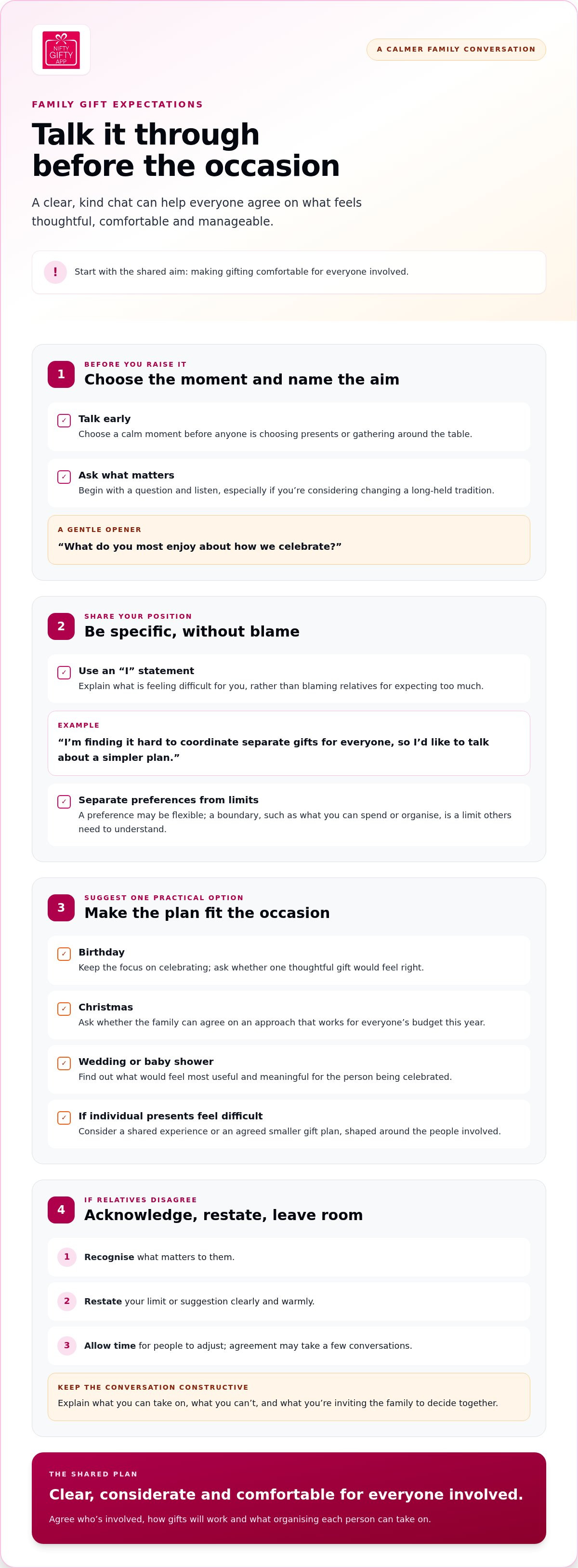
A gift conversation is easier before anyone’s choosing presents or gathering around the table. Pick a calm moment, name what you all want, explain what’s feeling difficult, then suggest one practical option. That keeps the discussion about making the occasion enjoyable, not judging how someone gives.
Early, specific conversations make shared expectations easier to understand and plan around.
Conversation starters for a calmer family discussion
Begin with a question, not an announcement. You might say, “I’d love us to make gifts feel comfortable for everyone this occasion. What do you most enjoy about how we celebrate?” Listen first, especially if you’re considering changing a long-held tradition.
Then explain your own position with an “I” statement. “I’m finding it hard to coordinate separate gifts for everyone, so I’d like to talk about a simpler plan.” That’s clearer and kinder than blaming relatives for expecting too much. Adapt the wording to the occasion:
Birthday: “I’d love to keep the focus on celebrating. Would one thoughtful gift feel right?”
Christmas: “Could we agree on an approach that works for everyone’s budget this year?”
Wedding or baby shower: “What would feel most useful and meaningful for the person we’re celebrating?”
Keep the conversation away from gift opening or a busy family gathering. A private message or a quick chat ahead of time gives people room to think and reply without an audience.
How to respond when relatives disagree
Start by recognising what matters to them, then restate your limit or suggestion. “I know exchanging individual presents is part of what you look forward to. I’m not able to organise one for everyone, so could we look at another way to keep the tradition?” You could propose a shared experience or an agreed smaller gift plan. Choose an option that fits the people involved, rather than presenting it as the one right answer.
Some relatives may need time to adjust, and agreement may take a few conversations. Stay warm and specific: explain what you can take on, what you can’t, and what you’re inviting the family to decide together. Managing family gift expectations doesn’t mean controlling everyone’s response. It means making your part clear and leaving room for others to share theirs.
Once you’ve agreed on an approach, keep the practical details easy to revisit. Family gift list planning with Nifty Gifty App lets organisers manage lists and occasion budgets in the iOS or Android mobile app.
Family gift-giving boundaries: agree on money, gifts and traditions
Boundaries make gifting more comfortable when they’re clear and respectful. A preference is something you’re open to changing, such as whether gifts are wrapped or whether an experience sounds more fun than a physical present. A boundary is a limit you need others to understand, such as what you can spend or how much organising you can take on.
Be specific without judging anyone else’s choices. You might be flexible about handmade gifts but firm about keeping the recipient list to immediate family. Or you may enjoy exchanging presents but prefer one gift per person rather than several. The aim isn’t to make every household spend the same amount. It’s to agree on an approach that feels workable for the people taking part.
Agreeing on a comfortable gift budget as a family
If money feels personal, start by deciding privately what you’re comfortable contributing. Then invite the family to discuss a plan without asking anyone to explain their finances. You could suggest a broad spending range, a single shared gift or a simple agreement to keep presents modest. Make it clear that people can share what works for them without revealing why.
Lower-cost gestures count too. A handwritten note, a homemade treat or time together can feel thoughtful without matching the price of another person’s gift. A shared picnic or family outing may suit one group; practical presents may suit another. These are different ways of showing care, not lesser versions of gifting.
Changing a family tradition while keeping its meaning
Before changing a familiar routine, ask what people value about it. Is it the surprise, the time together, the chance to give something personal or simply the ritual of exchanging gifts? Keep that meaning at the centre, then adjust the format. If everyone enjoys choosing a present, for example, you might keep that part while agreeing on fewer gifts or a smaller shared list.
Boundaries can cover more than spending. Talk about how many gifts feel manageable, who’s included, whether handmade presents are welcome and if an experience could replace individual items. A clear list of agreed choices can help the organiser keep decisions visible. A gift list organiser app can bring shared gift details together.
Think of the arrangement as a plan for this occasion, not a permanent family rule. Afterward, ask what felt good and what you’d change next time. That small review keeps managing family gift expectations grounded in what works for your family now, while leaving room for traditions and circumstances to shift.
A practical plan for holiday gift expectations and other occasions
Once relatives have agreed on an approach, put the practical details somewhere everyone can refer back to. This is especially useful when family members live in different cities or countries, or when each occasion brings a different mix of people. Holiday gift expectations may involve the wider family, while a birthday or family celebration could include only a few households. Keep the plan specific to the people taking part.
A before-the-occasion checklist for family organisers
Before plans gather momentum, run through these points:
Confirm who’s participating. Check which recipients are included and who is giving a gift.
Restate the agreed approach. Note the plan for gifts, spending comfort and any shared presents.
Share the details early. Use plain language and one accessible place, such as a group message, so relatives can respond and revisit the information.
Share the organising. Ask someone else to confirm the recipient list, collect preferences or send a reminder. Don’t assume every detail belongs to you.
For a birthday, the plan might cover one recipient and a small group gift. For a holiday gathering, it may need to spell out which relatives are included. At a family event with separate guest groups, keep each group’s arrangements clear rather than assuming one plan fits all.
Keep gift coordination separate from payment handling. If relatives are contributing to a shared present, agree how they’ll arrange payment directly between themselves. Nifty Gifty App tracks group contributions with a live running total, but doesn’t collect or process payments.
What to do when expectations change
Plans can shift as people’s preferences or circumstances change. Update the group with a brief, neutral message that states what’s changed and which decisions are still open. For example: “A few of us can’t make the original plan work, so let’s confirm whether we’re keeping the shared gift or choosing a different approach.” Avoid sharing someone else’s personal details unless they’ve agreed.
After the occasion, take a moment to note what worked and what you’d discuss earlier next time. That way, managing family gift expectations becomes a practical process you can adjust for the next gathering, not a plan set in stone. For a clear view of shared gift choices, organise family gift lists with Nifty Gifty App.
Keep family gift plans clear with Nifty Gifty App
Once your family has agreed on a plan, keeping the details together can make it easier to follow through. Nifty Gifty App gives organisers tools to manage gift lists, occasion budgets and spending in one place. Organisers use the iOS or Android mobile app to add gift ideas and keep shared choices visible as the occasion approaches.
Use a shared list to make agreed gift choices visible
Add ideas to a list, then share it with relatives using a secure link or QR code. Guests can claim gifts without downloading an app or creating an account, and claims update in real time. Relatives can see which choices have been claimed, while the organiser keeps the gift plan together. The recipient receives the gifts; they don’t claim them.
It’s a practical way to support the approach your family has already chosen, whether you’re sharing ideas for one recipient or coordinating gifts across a group. Nifty Gifty App helps keep gift choices visible. It doesn’t sell gifts or process group payments, so relatives purchase gifts and arrange payments between themselves.
Keep occasion plans and group contributions in view
Organisers can track an occasion budget and spending in the app. These are planning tools, not financial advice, and they don’t set what anyone should spend. Use them to keep the occasion budget you’ve agreed on easy to review.
For a shared gift, contributors can chip in while Nifty Gifty App tracks contributions with a live running total. Contributors arrange payments separately; the app doesn’t collect or process them. That keeps gift coordination visible without confusing it with payment handling.
Managing family gift expectations takes a thoughtful conversation and a plan people can refer to. Nifty Gifty App can help keep that plan organised, while your family decides what feels right for each occasion. The subscription includes a 14-day free trial, then $7.99 a year. All your gifting, beautifully organised.
Make the next occasion feel more comfortable
Thoughtful gifting doesn’t require everyone to follow the same rules. Start by finding out what matters to your family, then talk early about spending comfort, gift plans and traditions. Clear boundaries can make room for different preferences while keeping the occasion warm and personal.
Managing family gift expectations also means sharing the organising. Agree who’s involved, make the plan easy to refer to and revisit it after the occasion. You can guide the conversation, but you don’t have to carry every decision or reaction alone.
Nifty Gifty App helps organisers manage gift lists and occasion budgets in its iOS and Android mobile app. Share a list by secure link or QR code, and guests can claim gifts without downloading an app or creating an account. Claims update in real time.
Start with one kind conversation, then explore Nifty Gifty App to organise your next occasion. A little shared clarity can leave more room for the part everyone came together for: celebrating.
Frequently Asked Questions
How do you manage family gift expectations?
Manage family gift expectations by discussing them before an occasion, agreeing on a practical approach and sharing the organising. Ask what relatives value, then clarify details such as who’s included, how many gifts to exchange and what feels comfortable to spend. Use “I” statements to explain your own limits without blaming anyone. You can guide the plan, but you can’t control everyone’s preferences or reactions.
Is it rude to set a family gift budget?
No. Suggesting a family gift budget can be a considerate way to make expectations clear and help people choose gifts comfortably. Raise it privately or with the group before anyone starts purchasing presents. You might propose a spending range or a modest shared gift plan, while making room for different circumstances. Relatives don’t need to explain their finances; they can simply say what works for them.
How do I tell my family I want fewer gifts?
Be warm and direct, and explain what you’d prefer without criticising anyone else’s gifting. For example: “I really enjoy celebrating together, but I’d feel more comfortable exchanging one gift each this year.” You could suggest a shared experience, a smaller gift plan or simply spending time together. Bring it up before the occasion so relatives have time to understand the change and respond.
Can family members agree on different gift budgets?
Yes. An agreed approach doesn’t have to mean every household spends the same amount. You might agree on a broad range, set a personal limit or decide that each person gives what feels comfortable. Keep the conversation focused on the plan rather than comparing what relatives can afford. Lower-cost, handmade or shared-experience gifts can be thoughtful choices too, and nobody needs to disclose personal financial details.
What should I do when relatives ignore a gift boundary?
Restate your boundary calmly and focus on what you can control. For example: “Thanks for thinking of me. I’m sticking with our one-gift plan, so I won’t be exchanging extra presents.” If the boundary concerns your organising time, explain what you can take on and invite someone else to handle the rest. A relative may choose differently, but you don’t have to change your own limit.
How do you manage holiday gift expectations across a family?
Start early by confirming who’s taking part, which recipients are included and what gift approach everyone has agreed on. Share the details in one accessible place, especially if relatives live in different cities or countries. Keep the plan specific to each group, as holiday arrangements may differ from birthday or family-event plans. If circumstances change, send a brief update and clarify which decisions still need agreement.
Can a shared gift list help manage family expectations?
Yes. A shared gift list can make agreed gift choices easier for relatives to see and help the organiser keep occasion details together. In Nifty Gifty App, organisers manage lists and occasion budgets in the iOS or Android mobile app, then share a list by secure link or QR code. Guests can claim gifts without an app download or account, and claims update in real time. To organise your next occasion, explore Nifty Gifty App.


Comments