
How to prevent duplicate gifts with shared wishlists
The simplest way to prevent duplicate gifts is to give everyone one shared wishlist and keep each item’s status current. If you’re working out how to stop buying duplicate gifts, ask family and friends to check the list before they buy and mark items they’ve claimed or purchased. One up-to-date list is easier to follow than a stream of group messages that can get missed.
It’s a familiar frustration: two people choose the same thoughtful gift while a useful wishlist idea goes unnoticed. A little coordination helps everyone shop with confidence and gives the recipient gifts they’ll enjoy.
This guide shows you how to coordinate gift shopping, track which ideas are open, claimed or purchased, and make wishlists more useful. You’ll also find practical ways to invite relatives and friends to add clear ideas, giving everyone a simple place to start for the next occasion.
Table of Contents
1. How can I stop getting duplicate gifts in the future?
Give everyone one shared place to record gift ideas and purchases. Duplicates often happen because one person can’t see what another has chosen. The risk grows when more people are buying or someone purchases a present weeks before telling the group. A shared list gives every giver a current reference point.
Start coordinating before gift shopping begins. Share the list 4-6 weeks before major holidays, birthdays, or events, and ask family members to add their ideas at least a week before shopping starts. For a family Christmas, that early list gives relatives time to choose different gifts without relying on a group message they might miss.
Give each gift a clear status: open, claimed or purchased. Before buying, check the list and confirm the item is still open. When several people are choosing gifts for the same recipient, an informal message thread can be hard to track. One current list, maintained by an agreed organiser, makes each person’s plans easier to see.
If an idea is already covered, suggest a useful alternative rather than leaving the giver to guess. Add another wishlist option, such as a different book by the same author, a requested colour or a practical item the recipient still needs. Include details like size or colour, and a product link if useful. Specific options make it easier to choose something distinct.
Keep reservations private if preserving the surprise matters. The organiser can record who has claimed an idea while keeping that detail from the recipient. Agree on this arrangement with the family first, then tell each giver how to claim an item without revealing their choice in a group chat the recipient can read.
Keep gift plans out of the recipient’s usual messages and away from shared devices. For example, coordinate in a family chat that excludes them, and store purchase notes somewhere they won’t casually open. Record the recipient, gift and storage spot as soon as it’s purchased. That last detail can prevent someone buying a replacement because the original present has been forgotten.
Before planning the next occasion, take a moment to review gifts from previous years. Note what the recipient already has, what they enjoyed and what remains unused. This quick check can rule out familiar duplicate ideas. Combined with a shared list and clear claims, it gives everyone a practical way to coordinate while keeping the surprise intact.
2. Reducing duplicate gifts, returns and exchanges
Set a clear per-person or per-occasion gift budget, then map planned purchases against the year’s occasions. Review the plan before each holiday or birthday, adjust it when a shared present replaces individual gifts, and record who is responsible. This gives everyone a spending boundary and a reason to coordinate before choosing another item.
Before buying, check the recipient’s list and the current status of each idea. If an item is claimed or purchased, choose an open alternative instead. For a shared present, record the plan clearly so relatives don’t each buy a separate version. A quick list review can prevent a duplicate and the extra trip that follows.
If a duplicate has already arrived, start with the receipt and the retailer’s return or exchange terms. Policies vary, so check the details for that specific purchase before making the trip. A gift receipt can help the recipient exchange a duplicate themselves. Keep the receipt with the item, and ask the giver before arranging an exchange if they included a personal note or chose it for a particular reason.
Make a return easier to manage by keeping the packaging and tags with the receipt while you decide what to do. If the retailer allows an exchange, choose a useful alternative the recipient still wants, such as another wishlist item. If returning it means a trip, gather the item, packaging and proof of purchase first, then plan one visit instead of several.
If a gift can’t be returned, consider whether the recipient could use it elsewhere. A spare book might suit another reader in the family, while a duplicate household item could be useful at a relative’s home. Emily Post Institute advises that gratitude is owed for the giver’s gesture, not the object. A warm thank-you can go hand in hand with a practical decision about the extra gift.
Plan Christmas purchases well before the holiday, rather than choosing items separately as it approaches. Add birthdays and other occasions to a yearly calendar, then note each planned gift and its status. When considering a new purchase, compare it with that record. This makes existing plans visible and helps everyone avoid spending on an item already covered.
After each occasion, update the list with what was purchased, returned or exchanged. Note useful details, such as which present was a duplicate and whether the recipient preferred another option. Use those notes before the next planning round to rule out repeated ideas. A simple record turns each holiday into useful guidance for the next.
3. Shopping independently without shared visibility
Separate shopping trips can work well when each giver sees the same current gift list. Without that shared view, two relatives may independently choose the same popular book or kitchen item. The problem isn’t shopping separately. It’s making a choice without knowing what someone else has already selected.
Give the family one digital wishlist link to use as its reference. A shared list can let relatives see gift ideas without creating an account. That helps when family members are in different places or someone shops during a lunch break. Share the same link in family messages instead of sending screenshots that quickly become outdated.
Choose a list that shows which ideas are available and which have been claimed. When a relative claims a wanted item, the list should update so other shoppers can choose something else. Real-time updates are especially helpful when family members are shopping at the same time. A static document won’t show the change unless someone edits and reshares it.
Use a simple shopping routine: open the list before choosing a gift, check its status, then claim it before completing the purchase. If the status is unclear, pause and message the organiser rather than assuming the item is still open. For example, a cousin shopping for a requested board game can claim it first, then let another relative choose a different idea.
Keep the list useful for independent shoppers by adding details to each idea. Include the book title and author, or the requested size and colour for clothing. If there’s a product link, make sure it points to the intended item. These details help relatives identify the exact gift instead of choosing a similar-looking version someone else has already bought.
Agree on who can update the list when plans change. If an item is no longer available, the organiser can remove it or add an alternative. If a shopper buys a gift outside the list, they should tell the organiser promptly so its status reflects reality. Otherwise, another relative may still see the idea as open and choose it too.
For families spread across different places, a shared digital list replaces separate notes and repeated messages with one place to check. Relatives can browse at different times while keeping gift choices visible to the group. The recipient can still enjoy a surprise, while each giver has a clearer view of what’s wanted and what’s already spoken for.
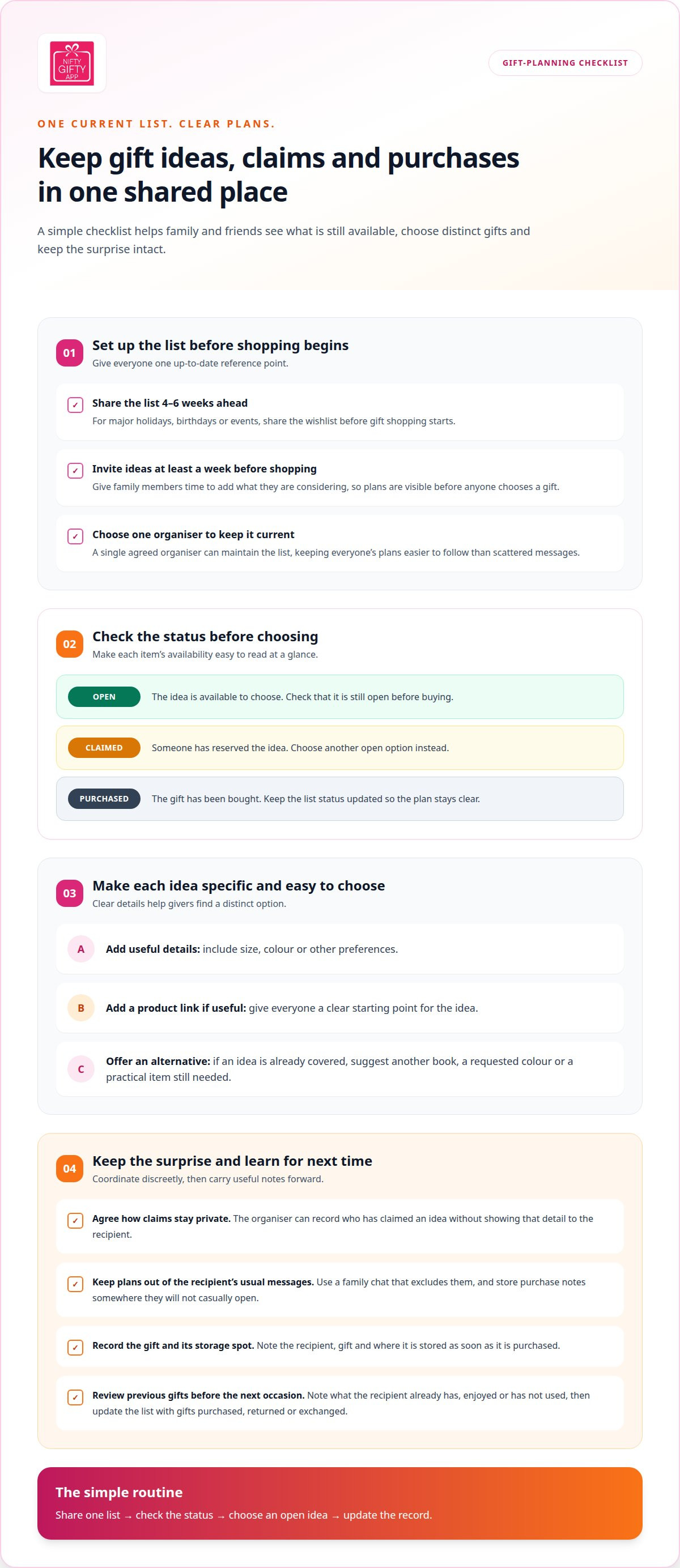
4. Distinguishing open, reserved and purchased gifts
Use three clear statuses for every gift idea: open, claimed and purchased. Open means nobody has claimed it; claimed means someone intends to give it; purchased means it has been bought and accounted for. A shared baby gift registry should show whether each gift is still open, claimed or purchased.
To track gifts and who they’re for, keep one list with the recipient, gift description, giver and current status. Update it as soon as someone claims or purchases an item, and add where it’s stored if the giver might forget. For example, “Aunty Jo, picture book, purchased, wardrobe shelf” is more useful than a note saying only “book”.
To check whether someone already owns an item, look at their wishlist and ask a family member who knows what they have. A list can show what the recipient wants and what someone has claimed, but it can’t show what’s already at home unless that information is shared. For a specific book, check the title and author before choosing it.
Keep each status distinct. A claimed item isn’t necessarily purchased, so don’t treat it as complete. If the person who claimed it changes plans, they should update the list and release the idea. Then another giver can choose it. This small step prevents an old claim from leaving the rest of the family unsure.
Make list updates part of the purchase routine. Before paying, claim the gift; afterwards, change its status to purchased and record the giver. If someone buys an item outside the list, they should tell the organiser promptly. Otherwise, relatives may see it as open and choose the same thing.
Sharing one current list works better than relying on separate messages. A group chat can bury an update beneath photos, plans and replies. Keep the list as the source of truth, and use messages to point everyone to it or flag a change. Don’t let an old screenshot replace the live list.
For a surprise, keep the recipient out of conversations about who has claimed what. Agree who can see giver names, and share the list only with the gift-giving group. The organiser can keep statuses accurate while relatives avoid revealing their choices in family messages the recipient might read.
Before each occasion, review every item with its giver. Confirm claimed gifts are still planned, purchased gifts are recorded, and open ideas remain available. If the list includes two similar options, clarify the exact version, such as a book’s title or a particular colour. Clear statuses make the next choice easier for everyone.
5. Encouraging family and friends to create wishlists
Make a wishlist feel like a helpful invitation, not homework. Explain that one shared list lets the family choose gifts the recipient wants and see what’s already claimed. For example, tell relatives you’re collecting ideas for Mum’s birthday so everyone can pick something personal without guessing.
Ask politely, framing the request around avoiding duplicates and choosing thoughtfully. Try: “I’m putting together gift ideas for Dad. What would you enjoy, and is there anything you already have?” This gives them room to name a favourite, mention something they own or say they’d prefer a surprise.
Keep the list simple to fill in. Invite each person to add a few specific ideas, rather than asking for a complete catalogue. A book title and author, clothing size and preferred colour, or three large muslin cloths for everyday use gives relatives a clear starting point. Add alternatives at different levels of detail, such as a favourite activity or a practical item they need.
Timing helps. Set up Christmas wishlists in October or November, before holiday shopping gathers pace. For birthdays and other occasions, share the list well ahead of the date so relatives can add ideas before they start shopping. A reminder in the family group chat can prompt people without turning gift planning into repeated follow-ups.
Explain how claiming works before inviting everyone. A shared list should show which ideas are open and which have been claimed, so relatives can choose independently. Ask people to mark an item when they decide to give it. If they later change their mind, they should update its status so another giver can choose it.
Some relatives may prefer a surprise or feel awkward naming gifts. Offer a low-pressure option: they can add broad hints, such as “something for the garden”, or list what they already own. Another family member can help add ideas if the recipient would rather share them in conversation than manage a list.
Make joining in easy for relatives who aren’t comfortable with apps or online lists. Send one clear invitation with the list link and a short note explaining what to do. A digital wishlist that’s quick to view and update can make participation straightforward, even for family members who live far away.
For the next occasion, invite relatives to contribute ideas together and keep the list open to updates. If you want one place to organise shared gift lists, set up a shared wishlist for family and friends.
Nifty Gifty App
Nifty Gifty App gives organisers one place to manage gift lists and track what’s been claimed. It’s useful when family members shop separately, share ideas across different places or coordinate gifts for an upcoming occasion.
Organisers use the mobile app on iOS or Android. Guests can claim gifts through a secure link or QR code, without downloading an app or creating an account. Claims update in real time, helping other gift-givers see what’s covered while keeping the recipient out of the coordination.
Use a shared list to collect thoughtful ideas and make gift choices easier to follow. Visit niftygiftyapp.com to explore Nifty Gifty App.
Make the next occasion easier to organise
Make gift coordination a small part of your family’s routine, not a task saved for the final shopping trip. After each occasion, take a moment to note which ideas were useful and what the recipient might enjoy next time. This gives relatives a fresh starting point instead of relying on guesses or last year’s plans.
If you’re working out how to stop buying duplicate gifts, start before the next occasion: invite everyone to share ideas and agree where gift choices will be kept. A simple habit makes giving more thoughtful for the recipient and less effortful for the organiser.
Choose a shared approach that suits your family, whether relatives live nearby or across the country. Nifty Gifty App can help keep gifting organised as plans take shape. Explore Nifty Gifty App for your next occasion, and make room for more of the joy in giving.
Frequently Asked Questions
How do you prevent duplicate gifts before they happen?
Agree on one gift-planning routine before anyone starts choosing presents. Ask each giver to check the recipient’s current ideas, then tell the group which gift they’re handling. For a family dinner, one person might coordinate a shared present while others choose separate wishlist items. If someone prefers choosing independently, ask them to share their plan privately with the organiser rather than announcing it to the recipient.
How can I stop getting duplicate gifts in the future?
Keep a private note of gifts you already have and interests you’d welcome, then share useful hints with close family. For instance, mention that you own a coffee grinder but would enjoy a particular cookbook. After a birthday or Christmas, note which gifts were especially useful. A practical way to stop buying duplicate gifts is to make preferences easy to find before relatives start choosing.
What gift tracking apps or spreadsheets help prevent duplicate gifts?
Choose a shared tool that lets the group record ideas, who’s responsible and whether each gift is still available. Nifty Gifty App is a gift-list app for organising occasions. A spreadsheet can work too: create columns for recipient, gift idea, giver, status and notes. Keep one shared copy, assign someone to maintain it, and avoid separate versions that quickly show conflicting information.
How can family members coordinate gift buying without spoiling surprises?
Keep planning messages in a private group that excludes the recipient, and agree who can see the gift list. One organiser can privately match each giver with an idea while relatives share only the updates the group needs. If the recipient uses a shared device, avoid leaving gift messages or list tabs open. For an in-person celebration, ask guests to bring gifts discreetly.
What should I do if I’ve already purchased the same gift as someone else?
Contact the other giver privately and decide who will keep the gift before discussing options with the recipient. Check the retailer’s return or exchange conditions, and keep the packaging and receipt together. If returning it isn’t practical, consider whether the recipient could use a second copy elsewhere or offer it to someone who would appreciate it. A sincere thank-you still matters.
What are thoughtful alternatives to physical gifts that avoid duplicates?
Offer something tied to the recipient’s interests, such as cooking dinner together, helping with a garden project or planning a day out. You could also give a consumable treat they enjoy, like a favourite tea, or arrange a shared activity with relatives. Check their preferences first, including dates and accessibility needs, so the gesture feels personal and easy to enjoy rather than another item to store.